
Eyebrow Tattoos
Enhance your natural beauty with custom brow services tailored to your features to restore sparse brows or achieve a polished everyday look.


What are the Different Brow Tattoo Styles/Techniques?
Microblading is no longer my technique of choice as it can be unsuitable for many skin types. Microblading can be more traumatic for the skin and possibly heal with blurred or patchy results — Nanobrows offer a gentler approach with a natural-looking outcome that ages more consistently over time.
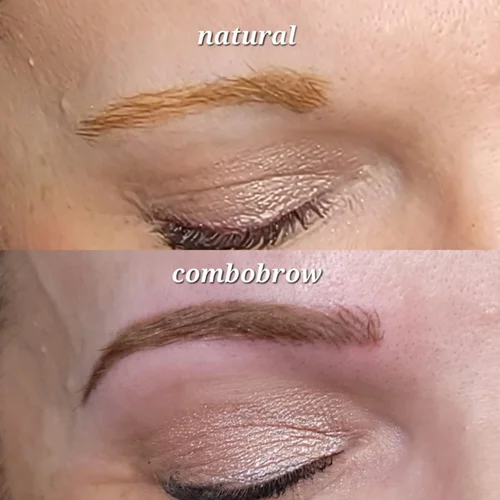
Combo Brows
Powder Brows


Nano Brows (Machine Hairstrokes)


Eyebrow Tattoo FAQs
What's the difference between Microblading & Nano Brows?
Microblading:
- Microblading is done with a hand tool.
- A small “blade” comprised of several small needles is used to implant ink.
- The ink is implanted by slicing the skin.
- Microblading is NOT suitable for MANY skin types.
- There is a greater chance of hairstrokes blurring together because microblading is a solid line of ink.
Nano Brows:
- Nano brows are done with a tattoo machine.
- Microneedles are used to implant the ink.
- The small needle grouping pierces the skin causing less trauma than cutting.
- MOST skin types do well with Nano Brows.
- The hairstrokes are comprised of pigment giving the look of a solid line. The ink is less likely to blur.
How long does Eyebrow Cosmetic Tattooing last?
The results of Eyebrow Cosmetic Tattooing typically last between 1 to 3 years. The color will gradually fade over time, although not completely. Every BODY and all skin are different and unique to each individual. The longevity of your tattoo is specific to you, your skin type, body chemistry, lifestyle, and long-term care of the tattoo.
Is the procedure painful?
Most clients describe the sensation as mild discomfort, rather than pain. A numbing cream is usually applied before and/or during the procedure to minimize any discomfort. The level of sensitivity varies from person to person.
What is the healing process like?
After the procedure, your brows may appear darker and slightly swollen for the first few days. As the skin heals, some scabbing and light peeling may occur, and the color will gradually soften over a few weeks. It is EXTREMELY important to follow aftercare instructions for optimal healed results and to avoid any complications such as infection, scarring, or inadequate retention of pigment.